The Difference Between Pleasure and Happiness


“Pleasure is something we experience. Happiness is someone we become.”
We Use One Word for Two Very Different Experiences
Ask someone if they're happy, and they might say:
"Yes, I had a great vacation."
"Yes, I bought a new car."
"Yes, I got promoted."
Notice something interesting.
What they're describing isn't happiness.
They're describing pleasure.
The two often appear together, but they are not the same.
Understanding this distinction may be one of the most important steps toward building a life of lasting well-being.
Because if we mistake pleasure for happiness, we'll spend our lives chasing experiences that were never meant to satisfy us permanently.
What Is Pleasure?
Pleasure is a positive feeling created by an experience.
It is immediate.
Enjoyable.
Exciting.
Rewarding.
It usually comes from something outside us.
A delicious meal.
A beautiful sunset.
Music.
Travel.
Shopping.
Winning a competition.
Receiving praise.
Falling in love.
There is absolutely nothing wrong with pleasure.
Life would be incomplete without it.
Pleasure adds colour to life.
But it has one characteristic that cannot be ignored.
It always ends.
The meal finishes.
The vacation ends.
The applause stops.
The excitement fades.
The emotion changes.
This isn't a flaw.
It's the nature of pleasure.
What Is Happiness?
Happiness is deeper.
It isn't simply a feeling.
It is a way of experiencing life.
A happy person still enjoys pleasure.
But their well-being doesn't disappear when pleasurable experiences end.
They don't need constant excitement to feel alive.
Their peace comes from within rather than from a continuous stream of external rewards.
Happiness is less like a firework and more like a steady flame.
It may not always be spectacular.
But it continues burning even when the celebration is over.
The Coffee Cup
Imagine receiving your favourite coffee.
The first sip is wonderful.
The second is enjoyable.
The third is still pleasant.
By the twentieth sip, you're hardly paying attention.
Nothing changed about the coffee.
Your mind changed.
Pleasure loses intensity through familiarity.
This happens with almost everything.
A new phone.
A luxury car.
A larger house.
A promotion.
Even compliments.
What once thrilled us eventually becomes normal.
The mind adapts.
Why We Keep Confusing Them
Society constantly tells us:
Buy this.
Achieve that.
Travel there.
Own more.
Upgrade everything.
Every advertisement carries the same hidden message:
Your happiness is one purchase away.
Sometimes it works.
For a few days.
Perhaps a few weeks.
Then another advertisement appears.
Another desire.
Another promise.
We don't notice that the system depends on our dissatisfaction.
If we remained permanently satisfied, many industries would struggle to exist.
This doesn't make pleasure bad.
It simply reminds us not to confuse it with lasting fulfillment.
Pleasure Depends on Circumstances
Imagine two scenarios.
In the first, you're enjoying a beautiful beach holiday.
The weather is perfect.
Everything goes according to plan.
Pleasure comes easily.
Now imagine the same holiday interrupted by a sudden storm.
Flights are cancelled.
Your luggage is lost.
The pleasure disappears almost instantly.
Why?
Because pleasure depends heavily on circumstances.
When circumstances change, pleasure changes with them.
Happiness Depends on Understanding
Now imagine someone who remains calm during unexpected difficulties.
They don't pretend the situation is pleasant.
They simply refuse to let it destroy their peace.
What changed?
Not the circumstances.
Their relationship with those circumstances.
This is the beginning of happiness.
Not because life became easier.
Because the mind became steadier.
Pleasure Says "More"
Pleasure has a predictable voice.
It whispers,
"Just one more."
One more purchase.
One more achievement.
One more holiday.
One more success.
One more compliment.
Pleasure is never completely satisfied because its nature is temporary.
The more we depend on it, the more we need it.
Happiness Says "Enough"
Happiness speaks differently.
It says,
"This moment is enough."
Not because there is nothing left to achieve.
But because contentment no longer waits for the next milestone.
A happy person can still pursue ambitious goals.
The difference is that they pursue them from fullness rather than emptiness.
Achievement becomes an expression of life.
Not an attempt to complete it.
Can We Enjoy Pleasure?
Absolutely.
The goal is not to reject pleasure.
Enjoy good food.
Celebrate success.
Travel.
Laugh.
Fall in love.
Build a meaningful career.
Create beautiful things.
The problem begins only when we ask pleasure to become permanent.
It cannot.
No experience was designed to last forever.
The more deeply we accept this truth, the more fully we can enjoy each moment without clinging to it.
The River and the Lake
Imagine a fast-flowing river.
It is exciting.
Dynamic.
Always changing.
That is pleasure.
Now imagine a calm lake.
Its surface remains peaceful despite gentle ripples.
That is happiness.
Most people spend their lives searching for a bigger river.
Very few learn how to become the lake.
Why This Difference Matters
Confusing pleasure with happiness creates endless chasing.
Understanding the difference creates freedom.
You stop demanding that every experience satisfy you forever.
You appreciate moments without trying to hold onto them.
You continue enjoying life's pleasures while building something much deeper.
An inner stability that remains whether today is easy or difficult.
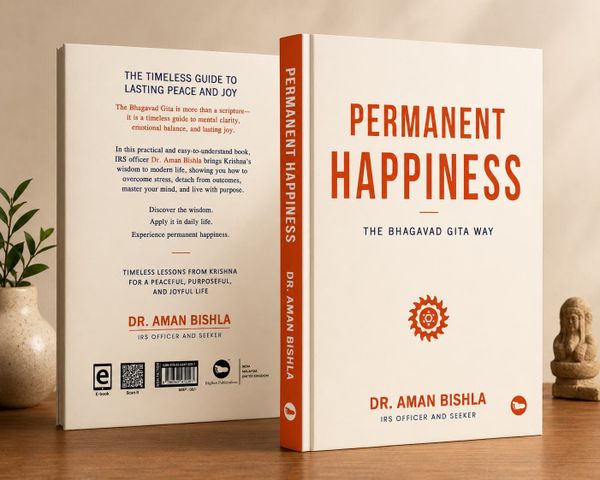
That stability is what I call permanent happiness.
A Simple Experiment
For one week, observe every pleasant experience.
A compliment.
A meal.
A purchase.
A success.
Notice two things.
First, enjoy it completely.
Second, notice how long the feeling lasts.
Not with disappointment.
With curiosity.
You'll begin seeing a pattern.
Pleasure comes.
Pleasure goes.
The question then becomes:
What remains when the pleasure ends?
That answer may change your life.
Reflection
Take a few minutes to consider:
- What gives me pleasure?
- What gives me lasting peace?
- Have I been expecting temporary experiences to create permanent happiness?
- Which moments leave me feeling deeply fulfilled even after the excitement fades?
The quality of your answers may reveal the direction of your future.
Key Takeaways
- Pleasure and happiness are related but fundamentally different.
- Pleasure comes from experiences; happiness comes from the way we relate to life.
- Pleasure is temporary and depends on external circumstances.
- Happiness is more stable because it grows from inner understanding.
- Enjoy pleasure fully, but don't expect it to provide lasting fulfillment.
- Permanent happiness begins when we stop chasing every passing emotion and start cultivating a peaceful mind.
Final Thought
Pleasure makes life enjoyable.
Happiness makes life meaningful.
The wisest life is not one without pleasure.
It is one where pleasure is welcomed, appreciated, and allowed to pass—while happiness quietly remains.
Next in the series: Why the Mind Never Feels Satisfied: Understanding the Endless Cycle of Desire.