Why the Mind Never Feels Satisfied


“The mind is not designed to remain satisfied. It is designed to keep searching.
Have You Ever Wondered Why "Enough" Never Feels Enough?
Think back to a goal you once believed would change your life.
Perhaps it was getting into your dream college.
Buying your first car.
Earning your first ₹1 lakh a month.
Starting your own business.
Writing a book.
For weeks or months, that goal occupied your thoughts.
You imagined how wonderful life would feel once you achieved it.
Then one day, you did.
For a while, you felt excited.
Proud.
Fulfilled.
But gradually, something changed.
The excitement faded.
The achievement became normal.
A new goal appeared.
Without realizing it, you started chasing again.
This isn't because something is wrong with you.
It's because this is how the human mind naturally operates.
The Mind Is a Survival Machine
For thousands of years, human survival depended on never becoming completely satisfied.
Imagine our ancestors.
If they thought,
"I have enough food. I'll stop searching forever."
they wouldn't have survived long.
The mind evolved to notice what was missing.
More food.
More safety.
More shelter.
More resources.
The habit of constantly seeking improvement helped our species survive.
Today, however, most of us are no longer struggling to survive.
Yet our minds still operate using the same ancient software.
Instead of searching for food, we search for success.
Instead of shelter, we seek status.
Instead of safety, we seek certainty.
The object changes.
The mechanism remains the same.
Desire Has No Finish Line
Imagine standing on the beach watching the horizon.
No matter how far you walk, the horizon remains the same distance away.
Desire works in a similar way.
At first we want one thing.
After achieving it, our definition of success expands.
Then another desire appears.
And another.
The finish line keeps moving.
Not because life is unfair.
Because the mind always creates another destination.
The Adaptation Effect
Human beings are remarkably adaptable.
This is one of our greatest strengths.
But it also explains why satisfaction rarely lasts.
Your first salary felt unforgettable.
Now it feels ordinary.
Your first home felt extraordinary.
Now it's simply where you live.
The phone you couldn't stop looking at last year now feels outdated.
Nothing is wrong with these things.
The mind simply adjusts.
Today's miracle becomes tomorrow's routine.
The Problem Isn't Desire
Many people conclude that desire itself is the enemy.
I don't believe that's true.
Without desire, we wouldn't learn.
Create.
Explore.
Invent.
Build.
Improve.
Desire drives progress.
The problem begins when we believe:
"The next desire will permanently complete me."
That expectation creates suffering.
Not the desire itself.
Why Comparison Makes It Worse
Imagine receiving a promotion.
You're delighted.
Then you discover a colleague received a bigger promotion.
Suddenly your own achievement feels smaller.
Nothing actually changed.
Only your point of comparison.
The mind rarely compares downward.
It usually compares upward.
There will almost always be someone wealthier.
Smarter.
More attractive.
More successful.
If comparison becomes your measure of satisfaction, satisfaction becomes impossible.
The Myth of Arrival
Most people believe in what I call the myth of arrival.
It sounds like this:
"Once I get there, everything will be different."
There.
The perfect job.
The perfect relationship.
The perfect body.
The perfect income.
The perfect life.
But when "there" becomes "here," the mind quietly creates another "there."
The journey continues.
Not because life demands it.
Because the mind does.
Satisfaction Cannot Be Collected
Many people treat satisfaction like an object.
They believe they can collect enough achievements until happiness becomes permanent.
Life teaches a different lesson.
Satisfaction isn't stored in possessions.
It is created by perspective.
Two people can own exactly the same things.
One feels deeply grateful.
The other feels they never have enough.
The difference isn't in their circumstances.
It's in their minds.
The Practice of Enough
One of the most powerful questions you can ask yourself is remarkably simple.
What is enough?
Enough income.
Enough success.
Enough recognition.
Enough work.
Enough possessions.
If you never define "enough," the mind will define it for you.
And it will almost always choose "more."
Learning to say,
"This is enough for today,"
doesn't eliminate ambition.
It eliminates endless dissatisfaction.
Gratitude Changes the Direction of the Mind
The mind naturally focuses on what is absent.
Gratitude intentionally focuses on what is present.
This doesn't mean pretending life is perfect.
It means refusing to ignore everything that is already good.
Gratitude interrupts the endless search for more.
It reminds us that while improvement is valuable, appreciation is equally important.
Growth and gratitude can exist together.
Becoming the Observer
Perhaps the greatest freedom comes when we stop believing every thought the mind produces.
The next time your mind says,
"I need one more thing before I can be happy,"
pause.
Observe the thought.
Ask yourself:
"Is this actually true, or is my mind simply doing what minds have always done?"
That small pause creates space.
And in that space, wisdom begins.
The Goal Is Not to Stop Wanting
The goal isn't to eliminate desire.
The goal is to prevent desire from controlling your happiness.
You can still pursue excellence.
Build a meaningful career.
Create wealth.
Write books.
Raise a family.
Travel the world.
Dream boldly.
But let your goals become expressions of your potential—not conditions for your peace.
When happiness depends on achievement, every delay feels like suffering.
When happiness comes from understanding, achievement becomes something to enjoy rather than something to depend upon.
Reflection
Take a few quiet moments and ask yourself:
- What do I believe will finally make me satisfied?
- Have previous achievements given me lasting satisfaction?
- What would "enough" look like in my life?
- Am I pursuing my goals from inspiration or from a feeling of incompleteness?
- What can I appreciate today without waiting for tomorrow?
These questions don't ask you to give up your dreams.
They simply ask you not to postpone your peace.
Key Takeaways
- The human mind evolved to keep searching rather than remain satisfied.
- Hedonic adaptation causes achievements and possessions to feel ordinary over time.
- Desire drives growth, but expecting desire to provide permanent fulfillment creates suffering.
- Comparison continually shifts our definition of "enough."
- Gratitude balances ambition by helping us appreciate what we already have.
- Lasting happiness begins when we learn to observe the mind instead of obeying its every demand.
Final Thought
The mind will always whisper,
"Just one more."
Wisdom quietly asks,
"What if this moment is already enough?"
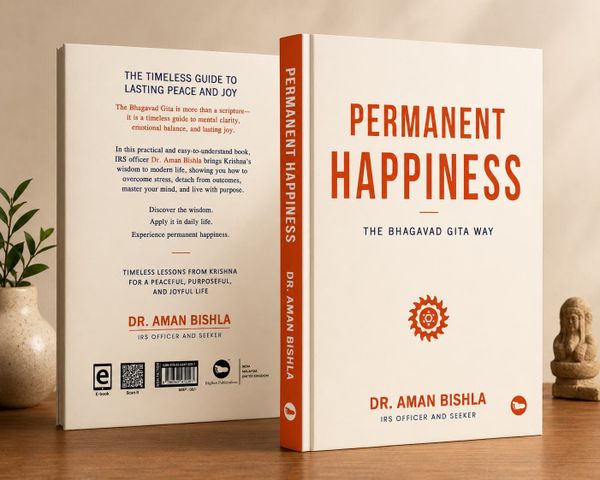
The answer to that question may be the beginning of permanent happiness.
Next in the series: The Science of Hedonic Adaptation: Why We Get Used to Everything.